Despite having the word "Year" in its title, this article is not another cheesy 2008 recap post. Especially considering that I don't need another one of those, since I've posted about 240 of them in the last several days. Or something like that, anyway.
I will not be recapping 2008 here, but I will be renaming 2008.
In terms of measuring wine blogging success, 2008 was The Year of Dr. Vino, a.k.a. Tyler Colman. Come to think of it, 2007 was nearly the Year of Dr. Vino as well, considering Tyler received a James Beard nod for his writing that year. So, basically Tyler is kicking all kinds of ass in the blogosphere, but what made 2008 the Year of Dr. Vino was Tyler's superbad onslaught (both on and) offline with the release of two (very good) printed books.
You would probably expect a PhD holder in Poli-Sci to be a decent writer, so it's no surprise that the books are well-written. What is surprising (to me, at least) was how accessible Tyler's books are for the novice wine aficionado, and how well his blog writing style, which consists primarily of short articles that focus heavily on interactivity with his readership, translates to his longer format works. Capturing that accessibility is not a skill that most of the academics that I know posses. While Tyler can be a quiet voice online (case in point, how is there justice in the universe when my twitter account has more followers than Dr. Vino's??), he was all over traditional media in 2008: in addition to publishing two books, he could be found in the pages of major newspapers and wine mags, as well as on television. For example, Tyler is a semi-frequent guest on FOX Business, discussing the impact of the recent economic downturn on the purchase of luxury items like Champagne (see inset pic for how I might have handled this situation if I were Tyler).
This significance of this sort of credibility (not to mention shrewd brand building) should not be overlooked. Tyler is quietly - and successfully - positioning himself as an erudite opera-goer to Gary Vanyerchuk's Joe 6-pack. Both are important, and both are signaling the establishment of a new breed of experts active in the field of wine appreciation.
I won't go into detail about Tyler's first book release, Wine Politics, because with a 9-month old baby that will start screaming to be fed at any moment, I simply don't have the time, except to say that it's a compelling work that those fascinated by wine should check out, especially considering how dependent the world of wine is (and has always been) on the world of politics.
I will say a bit more about Tyler's second book, however, A Year of Wine: Pairings, Great Buys, and What to Sip for Each Season, which Tyler sent to me several weeks ago, and which I've only recently gotten a chance to read (before you flame me for being lazy, remember: 9-month old!).
It's not that A Year of Wine presents novel information that has otherwise eluded many of the other excellent books for budding wine geeks already on the market. In fact, it doesn't really present anything totally new, even though it does have incredibly useful information (for example: how to successfully navigate the wine list when at an important business dinner for the first time).
The masterstroke is that A Year of Wine is a wine intro book penned by someone who has so garned so much credibility both on and offline. Put another way, Tyler speaks both Internet and brick-and-mortar.
While it can be enjoyed by just about anyone who is new to wine, A Year of Wine is probably best suited to those who already know what they like in their wine, but are looking to understand wine more fully and want a different approach then learning the basics and then exploring each region in order of importance / volume of production (which seems the typical layout for most wine reference material). A Year of Wine reflects Tyler's post-grad writing style, but might also appeal to a much younger audience (see pic below - though this author had to remove A Year of Wine from that reader, as she'd found it compelling enough to begin eating the pages).
Anyway, if I have a criticism to level at Tyler (and of course I do, because I'm incorrigible), aside from a distinct lack of overall mentions to 1WineDude.com on his blog, it's that Tyler needs to take his focus on interactivity with his blog readership and devote similar focus to his interaction within the community of online wine writers, retailers, and wineries. His voice is quiet within that space - it could benefit significantly from Tyler's wisdom and experience, and his penchant for keeping things honest. Tyler, we need ya here, man!
Cheers!
(images: amazon.com, foxnews.com)

A Year of Dr. Vino (A Book Review... Sort Of...)


The Botanist, The Vintner, and The Politicos (Book Review)
 An alternative title to Christy Campbell's The Botanist and the Vintner: How Wine Was Saved For The World might well be "How French Politicos Tried to Set Wine Science Back 200 Years, Putting All of the World's Vineyards in Perilous Jeopardy, Yet Somehow Told Without Conveying Much Suspense."
To be fair, The Botanist and the Vintner is well-written, impeccably researched, and expertly manages to make the topic of the phylloxera epidemic interesting (even for non-history-buffs, and non-wine-geeks).
Campbell's chapter explaining the strange reproductive cycle of the phylloxera louse alone is probably worth the purchase price of the book. It's no wonder that the complicated sexual life of the pest confounded some of the greatest scientific minds of the late 1800s - any species whose short-lived male variant has no anus, no mouth, and no digestive system is so frighteningly bizarre, there's no way you could dream that up something that odd.
And yet, I walked away from this book feeling oddly underwhelmed and a little unfulfilled.
If you're a fan of wine, eventually you will come across mention of the tiny vineyard pest that came perilously close to wiping out the world's supply of fine vinifera. In summary (and this is a very, very high-level summary), the little sucker feasts on the vine, and uses various parts of the vine as breeding ground.
The trouble for European vinifera is that it didn't evolve with the louse as did the vines in North America, so when international travel and shipping became viable in the 1800s, the pest finally had a means to travel from its native land. Many American vines have rootstock that can recover from the scars left by feeding phylloxera - most European vines didn't, and they began to die at an alarming rate as the louse spread across Europe. Because of its complex sex life, it took 19th Century scientists years to come to agreement on how to stop the pest (grafting onto American rootstock). The Botanist and the Vintner takes you through this journey of vine destruction, and exposes you to the frustrating world of European politics (which, by most accounts sadly has made little appreciable progress since the 1800s), which delayed action on recognizing and then implementing the final root cause solution to the deadly invasion.
Not to mention the sizable financial prize that was due to those that found the real cure, most of which never got paid out by the French government (let's not go there).
The book handles all of this well, but during the telling suggests a potentially dire future facing the vineyards of the present day that are grafted onto seemingly "safe" American rootstocks. It appears that some of those rootstocks are again becoming susceptible to an evolving phylloxera.
But after teasing us with the potential of another winemaking Dead Zone, The Botanist and the Vintner decides not to go there. Which is a shame, because the book starts there in its Prologue, which begins by describing an aerial surveillance of spreading phylloxera infestations in California in 1994. We are taken back to the present in the Postscript... to take a look at wine conisseurs chasing after wine from ungrafted viniferia vines as if they were the El Dorado treasure of the wine world.
No modern phylloxera update. Why start there if you're not going to finish there? It felt like a bit of unrealized suspenseful potential to me.
So, if you're looking for the history of the first world phylloxera louse epidemic, The Botanist and the Vintner is your book. Just don't expect a full-circle treatise on the topic for modern times.
Cheers!
(images: amazon.com, avenuevine.com, calwineries.com)
Wine - The Book I Wanted To Hate
 I really wanted to hate this book.
I was sent a promotional copy of Wine (edited by Andre Domine, who has authored a number of wine- and culinary-related books), and form the moment that it arrived, I was primed to hate it.
It's huge. It's impossible to comfortably read it in bed (trust me, I've tried it). At well over 900 pages and what feels like nearly 20 lbs of weight, it seemed better suited to my workout routine crunches than my wine education.
My wife instantly hated it. With an eight-month-old baby in one hand and a full shopping bag in the other, my wife attempted to kick the shipping box in which Wine arrived from the front porch and into our house (the kicking, I mean - the book did not arrive from the front porch... ah, you get the idea), which she told me nearly broke her foot.
But a funny thing happened on my way to hating this book - I fell in love with it. And now this post is going to be precariously close to sounding like an advertisement for Wine. But I don't care so much, because the book Rocks...
When I cracked open this book, I was thinking that the world needs another wine reference / introduction / tome like I need a hole in the head.
The first chapter states "Wine... has also become more egalitarian in that never before in its history has such a hige, high-quality range been available to so many people."
You could say the same thing about wine books, I thought.
The truth is, if you're a wine novice, you have dozens of decent choices when it comes to finding books to increase your wine know-how. If you're a wine expert, there are a few key resources that you will undoubtedly tap into from time to time (especially the Oxford Companion). Newcomers to the wine world also have a good many wine resources available to them on the web, and most wine blogs are in some way geared towards the newbie. Those of you who are past the point of being a beginner, but are not in the trade, or are otherwise someone with an 'Intermediate' level of wine knowledge, you have far fewer resources available to you.
Which is why most of you who fall into the "Intermediate" camp will probably dig Wine. It combines lucid and informed writing about all aspects of vino with some beautiful (but mostly functionally relevant) photographs, useful maps, and information on most of the world's winemaking regions. In a way, it's a bit like a one-stop-shop combination of the excellent Sotheby's Wine Encyclopedia and the fabulously-illustrated World Atlas of Wine.
Worth a look - even if you might need to hit the gym and bulk up before being able to lift it...
Cheers!
(images: amazon.com)
Book Review: Angels, Thieves and Winemakers (Wine Poems)
 Joseph Mills, author of A Guide to North Carolina's Wineries and faculty member of the NC School of the Arts, recently released a book of wine poems titled Angels, Thieves, and Winemakers.
I was contacted by Mills, who asked if I'd be interested in writing a review of the new collection. It didn't take me long to say Yes, since
- my undergrad major was English Lit, and I really dig poetry (not a well-known fact about me, I suppose), and
- I really, really dig wine (hopefully you've caught onto that one already).
In the realm of wine poetry, Mills doesn't exactly have a ton of competition. Hafiz comes to mind, and I'm not sure 600+ year old verse is the best to go by for the purpose of comparative analysis. So, we'll just have to review Angels, Thieves, and Winemakers on its own poetic merits.
How does Mills' collection stand up?...
The Low Down
Dylan Thomas he's not, but Mills has a gift for creating interesting and accessible verse, often including a subversive and thought-provoking twist.
Take, for example, the poem Opening Up which starts (quite humorously) by putting the reader in a familiar position:
As the dinner progressed / people's comments / about each wine / became increasingly / ridiculous, and when / the woman beside me / praised the way a red / unfolded in the mouth, / I snorted so hard / I almost shot snot / onto my plate.
If we're lucky / as the years unfold / we open up / until we reach a point / we can appreciate / one another's complexities / and even the tart irony / of finding yourself / at the table's next seat, / taking seriously, / so many of those things / you once mocked.
 Buy it - If you're into wine, you'll find something to like in Angels, Thieves, and Winemakers.
At their worst, Mills' poems read a bit too much like the short-hand from a personal journal. At their best, they're immediately accessible, clever, and offer nuggets of truth that are just dark enough to get you thinking.
I often found myself wishing Mills had ended a poem earlier to impart greater impact, rather than trying to tidy up his sentiment with an additional verse or two - it feels as though he sometimes errs on the side of playing it safe for the reader. In Sea Changes, Mills writes: "In college I read / the Iliad and Odessey, / and although I thought / they could be shorter, / overall they were better / than I expected" - I could apply the same critique to a number of the offerings in Angels, Thieves, and Winemakers.
But there's no doubting Mills' flair and cleverness, which alone make Angels, Thieves, and Winemakers a worthwhile read (preferably with a glass of interesting vino in one hand).

Cheers!
(images: fortscotch.files.wordpress.com, amazon.com, 24hourmuseum.org.uk)
Book Review: 101 Wines (or "Will Gary Vaynerchuk Save the World of Wine Reviews?")
 You see, it's like this:
Gary Vaynerchuk is the Howard Stern of the on-line wine world.
In case you've been living under a rock for the last two years: Gary is the driving force behind Wine Library TV, an on-line video blog of wine reviews and palate-building tips that has become a sensation in the Wine 2.0 community.
In his chosen medium (in this case, web video), Gary - like Howard Stern - unleashes his slightly-irreverent style with over-the-top, grass-eating gusto. Depending on your demeanor, you might find Gary's love-it-or-hate-it, in-your-face style endearing and energizing, or downright exhausting.
Off-line - also like Howard Stern - things are bit less off-the-cuff, and a bit more calculated.
Gary has stated that he is not in the wine business for the money, but "for my soul." This assertion seems entirely genuine (otherwise, how could he sustain the energy levels on a daily basis!). But it only takes hearing a few sentences from his father (a sometimes-guest on his video episodes) delivered in a more straight-forward, no-nonsense approach to realize that business is business - and for business, it had better be at least partly about the money. That money comes by virtue of getting wine from the shelves of their N.J. family store (Wine Library) and into the glasses of wine consumers...
To that end, Gary has performed brilliantly, shrewdly parlaying his on-line exposure into business success: he has garnered TV spot appearances (4 minutes on Ellen will still get you far more exposure to more eyeballs than any on-line presence), spearheaded a tenfold factor growth of his family's brick-&-mortar store, and purchased on-line wine social networking website Corkd.com (with trails leading back to Wine Library). Well, performed brilliantly notwithstanding his poor taste in NFL teams of course.*
Gary's approach is New Media, for sure - but it's sagacious, old-school business sense all the way.
Gary's latest foray into expanding his media media presence is the printed word: his first book, 101 Wines Guaranteed to Inspire, Delight, and Bring Thunder to Your World hits the streets in paperback tomorrow. Following is my review of Gary's latest friendly assault on the wine world.
[ Full disclosure: I received 101 Wines from Gary's publicist for a review (under the condition that I could write any positive or negative reactions, of course). ]
If you're skeptical about a wine retailer writing a book of wine recommendations (I had my doubts as well), take note that not every wine in 101 Wines is available via Wine Library. At least, not yet anyway... I know this because I checked it myself.
The Low Down
Like Gary's video episodes, there is minimal wind-up (less than 15 pages of introduction) in 101 Wines, and maximum time (200+ pages) spent on extolling the virtues and colorful descriptions of his wine picks. For those bordering on ADD, the final 20+ pages of the book provide quick-hit lists of recommendations for holidays, or based on top his rankings."Without the benefit his exuberant live delivery, some of the written descriptions lack the punch they would otherwise have 'in person'"
Gary's enthusiasm translates to the printed page - mostly. Without the benefit of his exuberant live delivery, some of the written descriptions lack the punch they would otherwise have "in person" (case in point: a wine that has characteristics of a big guy in a barrel floating towards your mouth...).
Still, you have to give serious props to a self-described "wine guy for the average Joe" who isn't afraid to recommend wines made from Charbono, Tinto Fino (recognizing the sometimes-neglected rising star that is Spanish wine), or who is bold enough to spotlight excellent Lebanese wines. Hardly the first choices that the average Joe might be looking for at their local wine shop.
Like wine itself, 101 Wines is best consumed in responsible doses. This is no knock on the writing, which is witty and expressive. It's just an acknowledgment of the fact that reading about wine tasting is like trying to learn how to french kiss by studying a diagram. Fortunately, each wine in 101 Wines is given about two pages of focus, making every recommendation a quick-hit read so you can get on to creating a shopping list and finally tasting.
Buy It or Skip It?
Buy it. 101 Wines is an entertaining and fun read - likely, you'll feel as though Gary is talking you through a gunshot-speed introduction to some skillfully picked wines. It's geared towards the wine novice in its presentation of wine varietals and Gary's vocabulary of wine descriptors. More experienced oenophiles will find value in Gary's recommendations, some of which will surely surprise those that still doubt Gary's palate.
"101 Wines is an entertaining and fun read - likely, you'll feel as though Gary is taking you on a gunshot-ride introduction to some skillfully picked wines."
While the tone of 101 Wines is all-Gary, it's also a slightly toned-down Gary. If you enjoy the Love-it-or-Hate-it style of Gary's on-line video episodes, then you will likely enjoy his imaginative descriptors on the written page.
If you're not a fan of descriptors like "badass flowers" and comparing wine to the theoretical taste of purple paint, then this book will NOT turn you into a "Vayniac."
But if you haven't yet checked out of WLTV, and if you like a no-nonsense wine approach, you'll also probably enjoy this book.
In the book's introduction, Gary discusses his view on changing the world of wine. In a nutshell, that revolution in wine appreciation boils down to this: By eschewing snobbishness and empowering the palates of the masses, wine consumers will no longer be shackled by the reviews of a handful of people critics in traditional media dictating the prices and styles of today's wines. This wine 2.0 liberation will allow excellent wines that don't fit the current mold of securing high Parker scores to be appreciated by a wider audience of consumers.
In a way, Gary's popularity really is changing the wine world, and convincing a great number of people that wine, like beer, is damn fun. But as Spider-Man/Peter Parker's Uncle Ben once said, "with great power, comes great responsibility." As Gary rails against the industry impact of Robert Parker's points-based wine rating system, it's worth keeping in mind that Gary himself uses a Parker-esque 100-point scoring. As Gary's popularity continues to grow, securing him as the most influential wine reviewer outside of Parker (Robert, that is, not Peter!), won't this surely add to the issue of winmakers "chasing the points" to increase their bottle selling prices?
Only this time, they'll be chasing after the Vaynerchuk point?
Will Gary chose the Dark Side? Or will he deliver on the promise of his wine reviewer "Robin Hood" status?
Time will tell...
Cheers! * Gary - got a bet for ya: If the Jets have a better record than the Steelers this season (yes, that's the most difficult 2008 schedule in the entire NFL Steelers), I will personally record a video spot to air on your show - wearing a Jets jersey, & introducing you as "the master of all wine AND football. " If the Steelers have a better record, then you can plug my blog on WLTV, mentioning me as "the guy who knows more about football than Gary Vaynerchuk." I'll also take a bottle of `04 Branson Coach...
Now, the gauntlet has been thrown so please don't go the route of Mary Ewing-Mulligan, who (to-date) has cowardly ignored my challenge to arm wrestle her for a bottle of `82 Mouton.
Here we go Steelers... HERE WE GO!
(images: opusseven.com, wikipedia.org, pictopia.com)
Book Review: Noble Rot (A Bordeaux Wine Revolution)
 Book Review - Noble Rot: A Bordeaux Wine Revolution by William Echikson
"...the soil of Yquem is like that of a Stradivarius"The second edition of the on-line Wine Book Club is being hosted by Tim over at the venerable Winecast.net blog. For more information on the WBC, or to jump on in and participate yourself in a book review, check out the official Wine Book Club website and the the Shelfari WBC reader group.
- Lur Saluces
This time around, Tim has chosen Noble Rot: A Bordeaux Wine Revolution by William Echikson. The book is not short on accolades, having been a James Beard Foundation Award finalist. Echikson is also no slouch of a writer, having worked for Dow Jones, the Wall Street Journal, BusinessWeek, and written a handful of other well-received books (on wine and other topics).
The Low Down
Noble Rot centers (for the most part) on the history (ancient and recent) of Chateau Yquem, the Sauternes-based makers of some of the sweetest, most expensive, and most intoxicating elixirs known to winemaking...
 Similar to Hungary's famous Tokaji, the sweet wines of Sauternes receive their special magic by virtue of the fungus Botrytis cinearea (aka noble rot). The fungus draws out the water and concentrates the juice left in the grapes while on the vine, and also imparts exotic hints of yeast to the final ultra-sweet wine. High in acidity and sugars, the wines of Yquem are typically capable of aging for decades, if not hundreds of years, while still retaining sweetness and fruity complexity.
 Nature doesn't always cooperate to provide the right environment year-on-year for noble rot - so sweet Yquem is not always produced in every vintage, and grape selection is a laborious (and therefore expensive) process.
[ On a side note, I've often wondered who the first poor schlep was that decided to ferment the grapes affected by Botrytis. Like lobster, there is nothing appetizing about their appearance; that person must have been really, really desperate at the time - "I don't give a sh*t what they look like - throw them into the vat!"... ]
The result is an ultra-expensive, ultra-complex wine, from a Chateau with extreme cache factor (having been run by a single family of nobility for generations). Even at restaurants where it's offered, Yquem doesn't always make it onto the wine list.
"With a big spender who doesn't know anything about wine, putting a bottle of Château d'Yquem on the table is like giving a Porsche to a 16-year-old." - Aaron Brown, Sommelier of L.A.'s Ortolan restaurant.
The term "noble rot" could also be applied to the nasty struggle for power within the ranks of Yquem itself, to which Echikson devotes a good portion of the book.
Most interesting for me in Noble Rot was how Echikson skillfully details the work ethic of love-him-or-hate-him wine critic Robert Parker. It's fascinating to watch how a small parcel of Right Bank Bordeaux land, modern winemaking techniques, and a rising Parker score can take a Bordeaux family from near-poverty conditions to fame and fortune (as was the case for the makers of Valandraud), culminating in bad blood between business relations. As Jacques Thienpont (the force behind the similarly meteoric Le Pin) says in Noble Rot: "Life is like a river... You follow it and it takes you on a strange course." Some stranger than others, no doubt.
Buy It or Skip It?
 This is a tough call for me. The book is certainly well-written. But I struggled to understand the best audience to appreciate what the book has to offer. If you can put yourself in one (or more) of the following categories, then you're liable to love Noble Rot and should probably buy it as soon as possible:
a) You love you some Bordeaux wine
b) You prefer your history shaken, & with a twist of gossip
c) You are in the wine industry.
Otherwise, you may enjoy it as a decent read - or you may wonder what all the fuss is about and why Echikson is spending so much time dealing with stuffy old EU nobles fighting each other over stylistic differences and the merits of class. "Just pass the damn Le Pin already!" you may find yourself shouting. So, I hesitate to recommend this book to the casual wine aficionado - there are more accessible (and equally interesting) reads out there for the budding wine lover.
I struggled to understand the best audience to appreciate what the book has to offer.
Lur Saluces (who heads Yquem) has said that "Yquem basically belongs to those whom love it and no matter from whence they come… it belongs to its admirers."
In other words, it's not for everybody. And neither is Noble Rot.
Cheers!
(images: amazon.com, antique-wine.com, och.free.fr)
Shop Dude! Wine, Accessories, and Tools for Wine Learning Available on 1WineDude.com

I've been getting some reader feedback that the various items we've got for sale via 1WineDude.com are arranged in a, let's just say, less than optimal fashion.
Another way of putting it, is that the current layout is too friggin' confusing! So I'm offering this post to (hopefully) help clear up the confusion.
Looking for Wine? Looking for Wine Gifts & Accessories? Looking to up your Wine IQ?
Dude's got you covered!
1WineDude.com has all manner of items for sale through our Affiliates.
Checkout the links below and get yourself all wined-up!...
Get Wine
 Domaine547.com is an on-line place without pretensions, where you can drink, learn, & communicate about wine. 1WineDude.com readers get a 5% discount on their wine orders! Just enter the coupon code "dude" during checkout.
 WineQ.com offers hand-crafted wines sold by small, family-owned wineries in California. You can queue up your wine orders (a-la netflix) and shipping is free for orders over $35.
 MyWinesDirect's wines are carefully selected by experts, then approved by panels of wine drinkers just like you - to ensure that every wine's a winner. They try to make buying, serving and drinking wine fun, easy and enjoyable, while giving you the knowledge to experiment and the confidence to discover your own likes, dislikes and tastes.
 The Wine Messenger offers wine clubs, and collections of wines based on geography and winemaking styles. They also have a handy wine facts section that let's you learn and shop by varietal or country. Pretty cool.
 Morrell is a kickin' family-run shop out of NYC that sells wines and spirits from pretty much everywhere. They've been in business for 59+ years and perform their own tasting and evaluating before selling to you.
Get Wine Smarties
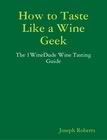
 How To Taste Like a Wine Geek: The 1WineDude Tasting Guide is a practical & fun approach to tasting & enjoying the world's greatest beverage! The tasting guide is written just like the 1WineDude.com blog - accessibly and without snobbishness. It's available in both Printed & eBook formats.
 DeLongWine.com offers two great products to help you learn more about wine: a Grape Varietal Table that shows wine grapes in a visually related way, and a nifty Wine Tasting Notebook that helps you to keep track of your wine adventures.
Get Wine Stuff
 Get sweet wine gear at Dude's CafePress shop.
We've got all manner of schwag available, like t-shirts, hoodies, caps, mugs, coasters, mouse pads, baby onesies - basically anything but wine. Dude's printed Wine Tasting Guide is also available at the shop.

1WineDude Recommendations - The Dude has Essential Wine Books, Interesting Wine Reads, Wine Accessories (like corkscrews and stemware), and even wine-sippin' Music selections, all available on his Amazon.com store.
Get Even More Wine Stuff
Didn't find what you were looking for? Try these wine-related offers on for size:
- More Wine Products @ Amazon.com
- Personalized wine gifts - Select a wine by clicking here!
- Build Your Own Wine Cellar eBook
- Wine Racks (and more) @ Nostalgia Electrics
Hope this helps! Cheers!
Book Review: Vino Italiano (The Regional Wines of Italy)
 This post, the Dude is offering his review of Joseph Bastianich's & David Lynch's weighty tome on all things Italo-wine-related: Vino Italiano.
My review is part of a larger blog-carnival-type effort with near-simultaneous reviews of the same book happening at other wine blogs, called the Wine Book Club. You can check out some of the haps and conversation at the Shelfari book group. For more on the background of WBC, and a bit about the authors of Vino Italiano, check out my previous post on the subject.
The Low-Down
You'd think that a 500+ page book would warrant a lengthy review, but that's simply not the case here (thankfully!). This is mostly due to the well-considered layout of the book.
Vino Italiano is divided into three sections:
- A primer on Italian wine history & wine laws (essential information if you hope to understand an Italian wine label!)
- A tour of each of Italy's major wine regions in turn, starting with cultural interactions / story-telling, moving to well-written descriptions of the wine styles of the region, and ending with a recommended regional food & wine pairing
- Reference material, including a glossary of Italian wine terminology, and a wine producer directory.
How To Use This Book
Novices will find the first section particularly useful. When you're dealing with Italian wine, expect to be confused - there's simply no easy way to deal with it, so you might as well jump right in; this section will help make that jump as painless as possible.
Wine geeks like the Dude here will find the 3rd section the most interesting, if only for a handy reference to remind us what some of the Italian wine label terms mean, or digging up the detail on what is and isn't permitted in some of the regional quality classifications, etc.
Most people, however, will find the book's large midsection the most useful. That's because the authors of Vino Italiano know what the Italians know: the only way to truly appreciate Italy's regional wine treasures in full is to experience them as part of a larger picture - that picture including a unique blend of regional culture, history, and (most importantly) food.
The majority of Italian wines are meant to be consumed with their regional gustatory counterparts - the recipe and wine pairings (provided by Lidia Bastanich and household-name Mario Batali) at the end of each chapter are not after-thoughts - they are essential components if you want to "get" Italian wine. Personally, I've been hoping to try the Spagheti alla Luganica and Anglianico del Vulture pairing (see pgs. 330-331). If you don't get hungry at some point when reading Vino Italiano, then you're missing the point.
You needn't read the book cover-to-cover - the book is structured so that skipping around to read about a particular region will give you a perfectly good understanding of that region and its wines.
Buy It or Skip It?
Buy it. Vino Italiano is well-written (Dude majored in English Lit. in undergrad, so he does not offer that sort of praise lightly!), and its harmonious blend of regional Italian culture, food, and wine make it a winner. It's also a book that will provide benefit for a wine lover at nearly every stage of his/her wine knowledge development. This is one of the few instances where a book's many accolades (on the jacket, and in its on-line user reviews) are well-deserved.
Cheers, and happy reading!
Wine Book Club 1st Edition, and Tasteless Exploitation of Naomi Watts

OK, so Dude is waaaaaaaaaaaaay late in giving this event props and publicity blogging love... But in the case of love, later is always better than never (that's what I always say anyway - and I come from a fine, distinguished, and long line of justifiers!). The on-line Wine Book Club has been launched earlier this month, with the first edition being hosted over at McDuff's Food & Wine Trail. I met David McDuff recently at Moore Brothers and I can tell you from first-hand experience that the guy has serious wine smarties, especially when it comes to boutique Italian, German, French, and Austrian wineries. So by the Dude's standards, David seems like a splendid choice to get the wine book club ball a'rolling.
The first wine book that will be reviewed by the Wine Club is Vino Italiano: The Regional Wines of Italy by Joseph Bastianich & David Lynch.
No, not that David Lynch!... This David Lynch is the beverage director over at NYC's celebrated restaurant Babbo. Also, I'm pretty sure that there aren't any bizarre dream sequences in this book... or hot naked shots of Naomi Watts either... at least, not that I've come across so far in my reading (but a Dude can hope...!). And if you wanna peruse glossies of Naomi Watts naked (meaning she was naked in the pics, not you naked while perusing them), that's probably best done while learning about Aussie wines. Not that the Dude spent any appreciable time considering it. Or for that matter searching the Internet for erotic-but-still-tasteful photos of Namoi Watts for this post. At least, not too much time.
Er, uhm, was I saying something about a book??
Anyway, this mighty tome on Italian vino (which also features Italian wine region recipes by Mario Batali, by the way) looks intimidating at first glance, but it's actually a very quick read - and there is still more than enough time for you to pick up a copy, join the book club love over at shelfari.com, and contribute to the reviews (due date is Feb. 26). Future events may be coordinated from a new website devoted to the book club - so watch this space.
Cheers - and happy reading!
Calling All Wine Bloggers!
Calling All Wine Bloggers!  As some of you may know, I'm currently in the midst of a multi-part blog post detailing my experiences and recommendations of how wine consumers can 'up their Wine IQ'. The first of these posts focused on Reading About Wine, and listed books and references that I have found the most helpful through the years in increasing my own knowledge about wine. Subsequent posts will tackle experience-building through Tasting, and finally I will interview a local winemaker about How the Boldest of wine lovers can work their way into the wine industry.
I'd like to extend this series to include input from YOU, the wine blogging community, on your own experiences and advice for others wishing to increase their wine knowledge....
I am pretty sure that the wine blogging world, and wine blog readers everywhere, would appreciate having the thoughts of experienced tasters, distributors, buyers, sellers, winemakers, critics, and passionate wine lovers on the joys and trials of life-long devotion to our favorite beverage.
So - if you're interested in contributing, please send me a link to a post of your thoughts and experiences on building wine knowledge. This could be a link to a similarly-themed article that you've posted in the past, or a brand new post on your Blog. Either way, send me the link - either via comment to this post, or via email to twowinedudes (at) yahoo (dot) com - and I will summarize in a post, linking to all of your indvidual posts from here. (If you don't have a Blog but would like to contribute, I will publish your input in the post).
I'm a firm believer that nothing ever really gets done without having some kind of target date. So please send your input to me by December 31st, and I will post the results during the first week of the new year.
Thanks for your time, attention, and (in advance) thanks for helping the wine consumers of the world!
Cheers!
-Joe (the 1WineDude)
The Top 10 Wine Books You Really Need (How To Become a Wine Geek - Part I)
This post is the first in a three-part series where Dude will give you a 'wine insider's' take on how to seriously up your 'wine geek' knowledge (and hone your overall wine-tasting skills along with your "impress your party goers" wine profile).
When this Dude gives in-home wine tastings, probably the most frequently asked question is "How can I learn more about wine?" As Lao-tzu once said, "The Great Way is Easy" and he may have well been talking about obtaining wine knowledge, because Dude has been there and he can tell you that all it takes is three things:
- An open mind
- Patience
- More Patience
I usually recommend a three-step program, which I will cover individually in three posts (counting this as #1, with the others to follow relatively shortly):
- Read (see below)
- Taste
- Be Bold
The Top 10 Wine Books You Really Need

For Beginners
1. Oldman's Guide to Outsmarting Wine by Mark Oldman
 The book I wish I'd had as budding a wine novice. Mark Oldman provides what might be the best and most well-paced (not to mention most practical) wine introduction book on the market. As a beginner, you will not be disappointed.
2. Wine for Dummies by Ed McCarthy & Mary Ewing-Mulligan
 THE starting point for your induction into the world of wine. I know the brother of one of the authors, both of whom really, really, really know their stuff.
3. How To Taste by Jancis Robinson
 Great reading for the beginner who wants to learn more about how to enjoy wine, all done in an open and not-so-stuffy style. The important thing about this book is the emphasis on how to taste wine, which (as we will explore in Dude's next post), is the single most important skill you can build to up your wine IQ.
Intermediate
4. The Wine Bible by Karen MacNeil
 A mighty tome of accessible wine knowledge, with excellent primers on the wine regions of the world for the beginner wine enthusiast, but also with tons of detail for the advancing wine geek as well. A fantastic achievement and a book that will prove to be a valuable resource for years to come (I still refer back to my tattered copy).
5. Hugh Johnson's Pocket Wine Book
 Updated every year, this book packs a ridiculous amount of handy wine information into an impossibly small amount of space. The abbreviations take some getting used to, but once you have them down you will wonder how you even wandered into a wine store without the handy reviews. It's also a great reference to have in the kitchen when trying to match up wine styles with dinner.
6. The New Sotheby's Wine Encyclopedia by Tom Stevenson
 A reference that is so handy, I destroyed the binding on my copy within weeks from overuse! I know both wine fans and wine industry pros that use this book, and it's handy - and accessible enough - for both. Plus, Tom does not hold back his opinions on developments in the world's wine regions and in the progress towards top quality from each area's most important wines - not watered-down, and therefore entertaining as well as informative.
Advanced
7. The World Atlas of Wine by Hugh Johnson & Jancis Robinson
 A beautiful coffee-table sized book for the budding wine geek, it's an essential reference for those interested in increasing their detailed knowledge of where their favorites wines come from and why that plays such an important part in why those wines taste they way that they do.
8. The Oxford Companion to Wine by Jancis Robinson
 This weighty tome is *the* wine reference book for the wine geek and wine professional. Not exactly easy to read in bed, but when you find yourself absolutely needing to know what terms like Recioto mean, you need this book. Also handy for finding interesting wine blog topics (and by the time you're ready for this book, you will probably have your own wine blog...).
9. Wine Report (Annual) by Tom Stevenson
 Another reference updated annually, this one is for the wine professional (or only the most serious of wine geeks). A great read for finding out what's new and noteworthy in the world's major wine regions and the industry in general.
Essential at Every Level
10. Your Very Own Wine Journal
You need your own wine journal to capture your reactions to wines that you taste, build an understanding of what you like (and dislike), and sharpen up your wine tasting vocabulary. The importance of this will get explored in my next post - but for now, just trust the Dude and get yourself a wine journal! (dude recommends the Little Black Wine Book).
The bad news - The whole kit & kaboodle will set you back about $150 - $175. So buy 'em in stages (don't worry, none of these are likely to go out of print anytime too soon).
The very good news is that the general state of wine writing - much like the general state of wine itself - has never been better, so you will get your moolah's worth. Long-time, prolific, and talented writers like Jancis Robinson, as well as a multitude of fine bloggers, are contributing accessible and well-written wine knowledge. Come on in - the water is fine!