Yo, Dudes and Dudettes! My blog has moved!

You should be automatically redirected in about 6 seconds. If not, surf yourself over to
http://www.1WineDude.com
and update your bookmarks. And keep it real!

Get Wine Smarties! The 1WineDude Tasting Guide is NOW AVAILABLE!
Showing posts with label learning wine. Show all posts

What's In a Label (Deciphering U.S. Wine Terms Isn't As Easy As You Think)

Hey, U.S. peeps - you folks who are still on the inaugural high - have you ever scoffed with national pride at the wine labels from other countries?

"Ha," you might scoff to yourself when perusing the aisles at your favorite wine shop, "I'm glad that wine labels from my country don't have anything to hide, and aren't hard to read. Like those crazy German wine labels that the 1WineDude talked about. I scoff at those!"

Hang on there, scoffer, and pay attention, lest you become a suckah. Just because U.S. wine labels don't use foreign words with 27 consonants in them doesn't mean that they are simple. Not to worry, though - Dude here is gonna hook up UP!

First, we should talk about the stuff that has to (by law) appear on a wine label if that wine is sold in the U.S.:

  1. Brand: Usually the same as the producer, but not always. It's almost always prominent text in big font on the label, and the brand is almost always an intellectual property of the producer.
  2. Varietal or Type: The label needs to state if you're making fruit wine, for example, or mead. For grape wine, you can use the grape varietal name: the wine needs to be made from at least 75% of the stated varietal (except in OR, where it's 90%).. Some generic names are still legally permitted, such as "sake" and "vermouth."
  3. Bottler & Importer: Name & address of who bottled the wine, and int he case of imported wines who imported it.
  4. Alcohol: This is ALWAYS on the label. Yes, it is. Sometimes the font is just so small that you can't read, but it IS there. I promise.
  5. Sulfite & Health warnings: Required by law (for sulfites, this is if the wine exceeds 10 ppm, which is about 99.99999% of the wines in the world) but are almost entirely useless. Don't get me started on the whole sulfite thing.
  6. Net Contents: Usually stated in ml. As in 750 ml (the volume of a standard wine bottle).

The following are usually not required but you frequently see them on quality wines:
  • Appelation: Where the grapes originated. For most geogrpahic descriptions on a wine label, 75% of the grapes used in the wine must have come from there. The more specific the geography, the higher the minimum percentage: 85% for AVAs, for example.
  • Vintage: The year the grapes were harvested. 95% of the wine must have been harvested & crushed that year (though I've no idea how you'd prove that...).
  • Vineyard name: If used, 95% of the grapes must have been grown there.
And you thought there was nothing to U.S. wine labels....

But wait... it gets even trickier!

The more perceptive among you might have noticed that the back label of wine bottles usually have a statement by the name of the producer such as "Produced By" or "Cellared By". There is a reason why they are different: they have legal definitions:
  • Cellared By, Selected By or Vinted By: The producer crushed less than 10% of the grapes.
  • Made By: They crushed 10% of the grapes.
  • Produced By: They crushed 75% of the grapes.
  • Grown, Produced and Bottled By: 100% of the grapes come from land owned or controlled by the winery and the winery crushed, fermented, aged & bottled the wine in a "continuous process."
  • Estate Bottled: Pretty much the same as "Grown, Produced and Bottled By" but the winery is located in an AVA (the same one where the grapes were located).

Not so simple, eh Mr. & Mrs. Scoffer?

And finally, the following terms look impressive on a label, but have no legal meaning whatsoever:
  • Reserve
  • Special Selection
  • Old Vines
For more detailed information on wine labels, check out WinePros.org. Proceed with knowledge... and caution.

Cheers!
(images: 1WineDude.com)

Read the full article...

Judging the Judges: Study Shows Wine Judges Aren't That Reliable (or does it...?)


The Journal of Wine Economics has just published a study authored by Robert T. Hodgson titled An Examination of Judge Reliability at a major U.S. Wine Competition. The reported findings should make the fodder for about 10,000 wine blog articles over the next few weeks.

The study tracked the ability of wine competition judges to replicate the scores that they gave to wines (during blind tasting competition) at the California State Fair. The study found that (emphasis is mine):

...judges were perfectly consistent... about 18 percent of the time. However, this usually occurred for wines that were rejected. That is, when the judges were very consistent, it was often for wines that they did not like...
Let the blood-letting commence!

I fear that the media will take hold of this and start to sound the death knell for the ability of so-called experts to taste and rate wines (again), or use it to shake up an already arguably unfavorable view that wine appreciation and competition is the height of snobbery.

Neither are true, and this study does little to bolster either point. Why? Because wine tasting is, at its heart, heart a subjective exercise.

The study is clear on its intentions, which was not to shake up the world of wine competition, but to "provide a measure of a wine judge’s ability to consistently evaluate replicate samples of an identical wine. With such a measure in hand, it should be possible to evaluate the quality of future wine competitions using consistency as well as concordance with the goal to continually improve reliability and to track improvements associated with procedural changes..."

To understand why this study doesn't ring so true with me, I need to give you a little detail on the mechanics of the study:
When possible, triplicate samples of all four wines were served in the second flight of the day randomly interspersed among the 30 wines. A typical day’s work involves four to six flights, about 150 wines... The judges first mark the wine’s score independently, and their scores are recorded by the panel’s secretary. Afterward the judges discuss the wine. Based on the discussion, some judges modify their initial score; others do not. For this study, only the first, independent score is used to analyze an individual judge’s consistency in scoring wines.
In summary: the judges weren't consistent when faced with tasting hundreds of wines in a day, and there revised scores (based on panel discussion - which can have a huge impact on how you would evaluate a wine) weren't used.

If the study proves anything, I think shows that trying to judge hundreds of wines in a day is a first-class non-stop ticket to palate fatigue, even for experienced wine judges.

Now that I think about it, blind tasting is so notoriously difficult that I give the judges in this study credit for being consistent almost 20% of the time. That would be a respectable hitting percentage in baseball (not sure... I don't follow baseball actually)...

While the media may latch onto this one, the study hinted that there is some modicum of possible salvation for the madness surrounding wine competitions in general - not by way of wine judges, but by way of the ultimate judges of wine: the Consumer.
...a recent article in Wine Business Monthly (Thach, 2008) conducted as a joint
effort by 10 global universities with specialties in wine business and marketing found that consumers are not particularly motivated by medals when purchasing wine in retail stores. If consumer confidence is to be improved, managers of wine competitions would be well advised to validate their recommendations with quantitative standards.
Interesting conclusion. And a hopeful one.

Cheers!
(images: legaljuice.com, wine-economics.org)

Read the full article...

Why Huge Wine Lists Suck

With the recent review I penned for WCDish.com, I've had restaurant wine lists on the brain lately.

Which means that this post will likely be ill-timed, given the dearth of restaurant-goers in an economy that is wading knee-deep in layoff announcements. Oh well - timing was never one of my strong suits.

Anyway, as a semi-educated wine geek, I fully appreciate that I might approach a restaurant wine list in a slightly different way than the average diner, in that I might have a deeper knowledge of what the foreign word mean, or what the wine is supposed to taste like from region XYZ.

Which is not to say that I think I'm smarter than the average restaurant-goer; quite the contrary, as I can tell you that 90% of them will be able to calculate an appropriate tip faster than I can (I like words - math... not so much). It just means that I'm probably geekier about wine than the average restaurant-goer.

But... at the restaurant table, while I may have more trouble with tip calculation due to my mathematically-challenged brain, my wine list perusal goal is no different than the average restaurant goer's: find a good bottle of wine at a decent price that will go well with dinner.
Which is why I think that huge-ass restaurant wine lists suck.

Tyler over at Dr. Vino recently posted an article about a Tampa restaurant (Bern's) that might be of interest to those who will be traveling to Tampa to watch the STEELERS trounce the Cardinals in Superbowl XLIII. Bern's boasts 6,800 selections and more than 500,000 bottles. I don't even want to see that wine list.

For me, dozens of pages detailing hundreds of choices of wine amounts to two things:

  1. A brief curiosity as I look up something geeky say softly, to no one in particular, "Wow. They have a bottle of 1925 Chateau Légendaire Maison Pompeux that costs more than my car..." (this might have appeal to boring wine snobs, but if that's your clientelle then I am probably not coming back to your restaurant anytme soon)...
  2. ...that quickly becomes a big distraction. If I am at a dinner with a group of like-minded wine geeks, then by all means bring on the wine cellar curiosities. Chances are that I'm not, however, and a huge wine list distracts from the dinner conversation and enjoyment that I should be having while I try to reason with the weighty tome of vino choices.
And the wine geeks out there will appreciate that it's always you that has to pick the wine - and the larger the wine list, the faster it will get tossed your way by the other dinner guests.

Here's an example:

A few years ago Mrs. Dudette and I took a trip to Vegas (baby, Vegas) and caught up with some old college friends of mine. We decided to grab dinner at Aureole, the restaurant with over 800 bottles of wine, which are stored in a glass tower and retrieved by babes on hoists.

The wine list is a tablet PC with a touch screen, with which you can browse and search the wine offerings. Sounds like a time saver, but it turned into exactly the same type of curiosity / distraction. While trying to settle on one of the 800+ bottles, I spent too much time looking at the bottles of 1925 Chateau Légendaire Maison Pompeux* that cost more than my car, and not enough time enjoying the conversation with my friends.

And after all, what's better - oohing and ahhing over a list of stuff you can't afford to drink, or drinking something good and sharing it with friends?

In my book, there's no contest.

Kind of like there's no contest in the upcoming Superbowl...

Go STEELERS!
(images: picasa/chung, m-kerho.net)

* - Not a real producer. At least, not that I'm aware of, anyway...

Read the full article...

Earth, Wine And Fire... and Wine Lists

Shall we explore the world of restaurant wine lists, while interpolating the badassness of Earth Wind & Fire in the process?

What the hell, why not?

First, we can establish the baddassness of EWF right away - that's easy: They funked, singing harmonies in octaves that would require most people to otherwise suck helium to achieve, all the while dancing in reflective costumes with capes. If that's not badass, then I don't kow what badass is.

What brings EWF to mind (in other words, what the f--k does this have to do with wine)?

I recently did a restuarant wine pairing review of a new wine list concept at nearby Teikoku for West Chester PA foodie website WC Dish. According to the Teikoku website (bolded items highlighted by me):

"For millennia, many eastern cultures have embraced the notion that five fundamental elements govern all aspects of life and environment. Though these elements appear in many forms, the most common are Earth, Water, Fire, Wind & Sky. At Teikoku we believe that wine can be represented by these elements as well. Keep in mind that our wines are not arranged according to conventional methods. We have selected a more transcendent form of organization. Perhaps our philosophy will offer you a unique perspective on your dining experience."
I found the wine choices to be quite well done, and in some cases even inspired, with very good by-the-glass selections reflecting quite a bit of the diversity in today's wine market (Spanish Rose, Torrontes, Carmenere, etc.).

But it's the Elemental wine concept that obviously stands out as unique. I've seen many, many styles of restaurant wine lists, from the stuffy and mundane "By Region" to wine flights inspired by a wine's palate weight, proces or even just fun, semi-random themes. But this is a different take entirely.

Teikoku's list certainly brings the Earth Wind & Fire funkiness. The trouble is, I'm not sure it actually helps anyone navigate the wine list any better than a more traditional method.

Some of us might feel a need to be more "grounded" on a particular day and gravitate towards the Earth (get it?) theme wines... but I can imagine many others looking at the Earth heading and wondering if the wine is going to taste like a mouthful of dirt.

But... you've got to give props to Teikoku for what they're trying to do. Unless you think they're trending towards the gimmicky side.
What do you think? Are they bringing the funk with this kind of wine list? Or are they just wearing the silver jumpsuits and capes?

Which got me thinking, Are other restaurants doing this? Will we see a more progressive trend towards different wine list presentations? And if we do, will these help the consumer? Or just confuse them even more?
Let me know YOUR thoughts!
Let's Groove, baby!
-------------------------------------------------

-------------------------------------------------

Cheers!
(images: 1WineDude.com, associatedentertainment.com)

Read the full article...

The Summer of Wine's Discontent (or "What Wine Can Learn From Beer")

The wine world probably won't miss the Summer of `08.

That's because the Summer of `08 seems like wine's Season of Discontent.

Personally, I've never been so happy to see the Autumn (even taking into account that the Fall is my favorite time of year... colorful leaves... dark beers... heavier wines... and football... sweet, sweet football...).

Anyway, it was last week, with Autumn and football in full swing, when I realized that the wine biz has a lot to learn from its "little" cousin, beer. You know, the one that wine likes to look down on and winsomely tolerate from time to time at family reunions, all the while not seeming to realize that its cousin lives in a bigger house, makes more money, and has more friends. Yes, that cousin. Wine - I'm talking to YOU.

Last week, I had the pleasure of hosting fellow blogger The Beer Wench, touring nearby beer stalwart Victory Brewing Company with her. Dude loves beer (in fact, I used to brew it), and he is tight with Victory: it's my favorite beer location, Mrs. Dudette and I are friends with Victory's events coordinator, and Dude's band is playing Victory's outdoor Fall Fest celebration this year. So we were able to score a private tour of the beer-making magic for The Beer Wench.

About halfway through said tour (when I was rolling hops in my fingers, forever imprinting it's aromatic fingerprint into my brain), I realized something very important (to me, anyway): I've yet to meet anyone involved in beer - whether it be media, distribution, crafting, or enjoying - who was snobbish to the point of being exclusionary. Nobody. Zippo. Nada. It just doesn't happen. All seem to be welcome in the land of beer. Sure, they have their favorites, and the occasional "low on taste high on commercial budget" examples that they love to hate (Bud Light, anyone?). But you're never, ever turned away at the door of fine beer. Never.

The mantra of the beer lovers?

Everyone else is also a potential beer lover - they just don't know it yet!

I wish that I could say the same held true for the world of fine wine...


The sad truth is that there is snobbery in the wine world, and some parts of the industry might actually bank on that snobbery to make their take-home pay.

Too many budding wine aficionados are scared off by "experts" or turned away by the snobbish who view fine wine as some sort of elitist entitlement, to whom holding wine at arm's length from newbies is some sort of perverse badge of wine honor. By actively deterring new potential wine lovers, the only thing that the 'elite' are doing for fine wine is driving its future of appreciation into the dirt. I'm NOT talking about the Robert Parkers of the world. I'm talking about those who think they're Robert Parkers, but lack the experience, renown, know-how, clout, and funding, yet somehow feel as though wine 'belongs' to them.

This has nothing to do with print wine media. It has to do with individuals (no matter if they're in the wine industry or not) who are perpetuating a myth that you need to earn your place to love wine. In fact, nothing could be further from the truth. Wine loves you already. it wants you to be its friend. Wine doesn't like the snobs, either!

In my view, it would help the wine world if most of those in it took a long, hard look at the world of beer and instead of turning their noses at it, embrace its sense of helpfulness and down to earth charm.

Hey! Wine world! You need to help yourself to a glass of "Get Over Yourself" Ale. Vintage: Now. Region: You.

In general (not just for wine), people are looking more and more to social networking and customized recommendations. Some wine distributors, wine mags, wineries, and a whole lotta bloggers "get" this, and are doing their best to help those consumers, newbies, and enthusiastic learners. And they're probably enjoying a cold brewski while they're doing it (and if not, they should, because whether hey realize it or not, they're taking a cue from the beer industry).

Arguably, there are now more helpful resources to help the wine neophyte than there have at any other time in history. The tide is changing. And it's coming for the wine world, whether it's ready or not.

Cheers!
(images: old-photos.blogspot.com, 1WineDude.com)

Read the full article...

Wine Mags that are Worth Reading

Asking me what wine mags to read is sort of like asking me what television shows are worth watching. I access them so infrequently, that I'm in danger of being totally irrelevant in my commentary.

But what the hell, it's never stopped me before!

I also get bored easily, so committing to reading an entire magazine or watching an entire TV show in one sitting doesn't always appeal to me (though longer formats, like books and movies, are no problem; oh, the irony...). Plus, I can't stand obnoxious advertisements, and I swear I can actually feel my brain cells dying just watching a few seconds of most TV commercials.

And if there are brain cells that need a-killin', I prefer to do that via the consumption of tasty vino!

Anyway, here are two of my quick picks in the Wine Mag. department...:


Best Traditional Mag: Wine & Spirits Magazine
Is it snooty? Sure, it's snooty - but it's well-written, award-winning snooty. Despite it's title being a bit of a misnomer (Spirits are often relegated to just one page), it's a useful mag. in that it offers good, terse commentary on the wines that it reviews.

The often highlight good wine dining picks as well, along with features on up & coming wine directors / sommeliers - which can be handy when you're traveling and looking for some excellent wine-related eats.

Most importantly, they also devotes special focus to value picks, which is the category where the vast majority of wine lovers are looking for help and recommendations.


Most Promising Up-&-Comer: Mutineer Magazine
Is it smarmy? Sure, it's smarmy, in the same way that MAXIM is a bit too pleased with itself - a style appreciated most by 20-somethings who don't know any better, but also appealing to 30-somethings who do know better, but don't care anyway and can therefore appreciate the small touches of irony sprinkled throughout the articles.

I asked Alan Kropf, Mutineer's Editor, about their mission: "I started the Mutineer to try and create a way for unexperienced drinkers to experience the world of fine beverage. A lot of people get frustrated with wine being so stuffy, so we saw an opportunity for a magazine like Mutineer Magazine to come about."

Lots of wine bloggers will find solidarity in that, since it's the reason many of us decided to start blogging in the first place.

And I can seriously dig that.

Cheers!


Read the full article...

A Wine Introduction (and Some 1WineDude.com Ch-Ch-Ch-Changes)


Changes are afoot here at 1WineDude.com.

By the way, I recently learned that the first recorded use of "afoot" was in Shakespeare's "Julius Caesar" - which is way cool. I'm a nerd, I know.

Anyway, I'm making some slight changes in the footprint (ha-ha) of the blog posts. Basically, they will start to get shorter - easier for you to read, harder for me to write. And, I'm hoping that they will also start to become more frequent. I've got a newborn in the house, bear with me...

Today, I thought I'd offer you a small contribution I made a few years back to the world of wine knowledge. When I started this whole wine consulting thing, I was frequently asked to provide wine overviews - so I put together a handy presentation that gives an overview of what wine is all about - from the dawn of wine in history, all the way to why you taste those fruits in your glass:


You should be able to view the original presentation file in most versions of PowerPoint, or with the (free!) Impress tool from OpenOffice.org. Handiest of all, you can access it online in Flash (Ahhhh-ahhhh!) format here.

I think some of you fine folks out there may find it useful. Enjoy!

Cheers!

(images: handpicked.co.uk)

Read the full article...

3 Things Your Dog Can Teach You About Wine Appreciation

I'm a dog guy.

While I don't hate cats, I don't love cats, either. Mostly, I get along best with the cats that think they're dogs anyway. Since this post is going to be about my schooling of wine appreciation literally going to the dogs, my apologies in advance to those who are cat lovers. I've never been taught anything about wine appreciation from a cat (more on learning wine stuff from domesticated house pets in a minute) - though they have taught me the art of totally ignoring people.

Since Mrs. Dudette has most of the newborn baby dudette feeding responsibilities, Dude here has been given primary Dog Duty at the House of Dude. I'm the one who now has to feed and walk my wife's Weimaraner, Samson (see pic above). (Actually, to be fair, after 7+ years together old Sammy is just as much my dog now as he is hers).

Sammy has been a great sport throughout the whole adjusting-to-the-baby thing, and he is very, very sweet with the baby. Having to walk the dog more often than I used to has made me take more notice of Sam's behaviors - such as licking the baby, sniffing around, licking himself, sniffing the baby, licking himself, and licking himself (did I mention licking himself?).

By observing Sam, I've actually learned a bit about wine appreciation. And no, it doesn't involve drinking so much that you want to sniff someone's butt, unless that's your thing (licking yourself is also optional). Though it does apparently involve startling segues from dog licking to wine tasting... maybe I should have thought about that one a bit more...

Anyway, straight from the home office in suburban eastern-PA, here are 3 Things that Your Dog Can Teach You About Wine Appreciation...

  1. Short, concentrated sniffs work best. Dogs have some of the best senses of smell around - and Weimaraners have one of the best noses in the doggie business. When my dog smells something, he doesn't take a long, drawn-out, overly-dramatic sniiiiiiiiiiiiiiiiiiiiiiiiiiiiiiiiffffff. He takes a burst of short, concentrated sniffs. Sniff... sniff-sniff... sniff-sniff-sniff-sniiiiiifff.

    Turns out there is a lot of merit in that approach if you really want to smell something thoroughly - and in the case of wine, smelling is where you will get about 80% of your enjoyment and appreciation. Shorter sniffs help to focus your olfactory senses, and may also help to keep your sense of smell from fatiguing too quickly. The sharper your sense of smell, the more you can pinpoint what aspects you like (or don't like) about the wine that your tasting.

    In the case of wine, smelling is where you will get about 80% of your enjoyment and appreciation for your glass of vino.

  2. Focus, focus, focus. Ever try to move a dog from a spot when he is smelling it during a walk? If not, I encourage you to do this as a test of your own upper limits of frustration. My dog will frequently stop in his tracks, plant his nose into a smell, and lock all four powerful legs so tightly that it would take a tow truck, steel cables, and an act of Congress to move him from whatever he is sniffing at that moment.

    When a dog is really smelling something, nothing can break his concentration. At that point, there is no walk, there is no leash, there is no master - there is only the smell. If you want to experience everything that a wine has to offer, you'd do well to imitate the concentration that the average dog gives to any random oder in which s/he gets interested. With that kind of focus, you'd be on your way to wine-tasting pro status in no time.

  3. Don't rush it. Once my dog stops smelling something and decides to start eating it, he is an shining example of what not to do when enjoying a wine (or any food or drink, for that matter). My dog will inhale food that he really likes. He will eat it so quickly, you would think there was a pack of angry, hungry velociraptors waiting 7 inches away from him ready to steal his morsels should he take more than 14 nanoseconds to eat them. The tastier the treat, the less he chews (or breathes) before swallowing.

    Which is exactly what you don't want to do when enjoying a wine. Take your time. Savor it. That glass isn't going anywhere, man. Relaaaax. See, isn't that nice? Sniff. Swirl. Focus. And enjoy.

    Now, go walk that dog!

Cheers!

(images: 1WineDude.com, nytimes.com, galacticpudding, javelinaleapwinery.com)

Read the full article...

10 Free Wine Web Resources You Probably Aren't Using


We're all short on cash in these times of recess -er, I mean, economic challenge. So the Dude has compiled a list of his 10 favorite wine resources on the web. All of them FREE. Each one will cost you exactly $0.00 to use. Bumpkis. Nada. Goose-eggs.

You can thank me later, by clicking the "Make a Donation" button on the Left and sending me some cash. Oh... uhm... wait a second... never mind...

Anyway, chances are that even if you're an experienced wine geek, you probably are not using some of these gems. I've found them to be extremely useful, or helpful in a pinch, and in some cases downright indispensable. Hopefully you'll find them valuable as well (look at it this way - you're almost guaranteed to at least get what you paid for `em!)...


  1. Wine Vocabulary: At a loss for words trying to find the right term to describe that wine you're tasting? Not anymore. With this handy aroma/tasting card from Vinography, you'll minimize the guessing and maximize the terminology in your tasting notes. And you are keeping tasting notes, right?
  2. Wine Terminology: Don't understand a term on the back of that bottle? Not anymore. WineLoversPage.com contains a ridiculous amount of information, and their Wine Lexicon is especially handy, easy to navigate dictionary-style, and contains click-able pronunciations for those of us who have a hard time with French (i.e., everyone but the French).
  3. Wine Labels: Confounded by tricky wine labels on those Old World wines? Not anymore. Another gem on the WineLoversPage.com website can sort that one out for you - a Wine Label Decoder, which can help you unlock the "secret code" and interpret just what the hell those German, French, and Italian wine labels are trying to tell you.
  4. Wine & Cooking: Wondering why yeast is the primary contributor of flavor to wine? No? Crap you're messing up my shtick for this article...! Anyway, maybe you will start to wonder about it after you check out GlobalGourmet.com's awesome Wine & Cooking reference.
  5. Wine Vintages: Doesn't it piss you off when you're at the wine shop, and you're trying to determine if that low sale price has anything to do with a nasty vintage? Not anymore. You can get a handy vintage chart to-go by pointing your mobile browser to Berry Bros. & Rudd's Mobile Vintage Chart.
  6. Wine & Health: Wondering if putting back those wines is putting years on your life ahead of your time? Wonder no more - the Professional Friends of Wine have compiled a wealth of wine health information in their Wine Health 101 Section.
  7. Wine Nutrition: Wondering about the nutritional content of that wine you're drinking? No? Well, these are health-conscious times, my friend, so you'd better get on the ball! CalorieKing.com can help you out with their nutritional-label-style details on popular wine types.
  8. Italian Wine: Confused by Italian Wines? You guessed it - not anymore. ItalianMade.com has an expansive and informative section on Italian wines, complete with regional maps, varietal information, and wine & food pairings.
  9. Grape Varieties: Getting tired of feeling like a dunce because you don't know the difference between Pinot Gris and Pinot Grigio? Alright, alright, it's a trick question; but any budding wine geek who has even a passing interest in wine grapes should bookmark this great grape reference from CellarNotes.net.
  10. Best Bang for the No-Buck: Love 'em or hate 'em, the folks at Wine Spectator do know their stuff, and they have put together one of the handiest one-stop-shop areas on the Internet for wine knowledge. In the case of their Wine Spectator School Library, that shop charges $0.00 USD, and comes complete with a glossary, regional wine maps, tasting materials, wine tasting advice. It's a fantastic place to start for the budding wine geek.

Cheers!

(images: freefoto.com, ox.ac.uk, thelanguagemenu.com)

Read the full article...

Meditation By The Glass: The Mindfulness of Wine Appreciation

(images: all from Joe's house!)

Although I was raised in the shadow of Roman Catholicism, I am not by any stretch of the imagination a religious man.

In fact, after attending an Oblate grade school, a Franciscan high school, and a Jesuit university for undergrad, I ended up totally religiously-confused. Not exactly a poster-child for American religious education.

Still, despite being (more-or-less) totally religious-averse, I would consider myself a spiritual person. Over the last few years, my wife has introduced me to Zen and Buddhist principles that we have tried to integrate into our lives, with some great results. I don't claim to understand any of the universe's mysteries, but there is no denying (for me, at least) the powerful & moving experiences of communion I've felt when meditating.

"This small word - witnessing - contains the whole of spirituality." - Osho
And by "meditating" I don't just mean the familiar image we have of someone sitting on a pillow silently exploring the depths of their witnessing (though doing that is great and I'd highly recommend it to anyone). I mean going about your daily life activities and truly witnessing each moment of your life - trying to be "in the zone" and really living, treating every action you take as sacred - whether you are washing the dishes, walking the dog, negotiating an important business deal, playing music...

...Or tasting wine.

It's by truly being meditative when tasting that we can most maximize both our enjoyment of wine and our wine appreciation skills...

I've written a few "glasses of zen" articles in the past, but I've never really explored how the simple act of witnessing can enhance the enjoyment of wine.

Some of the greatest noses in the wine business follow a similar "witnessing" tasting method, though they themselves may not call it meditation.

Take the love-him-or-leave-him wine critic Robert Parker, for example:
"When I put my nose in a glass, it's like tunnel vision. I move into another world, where every bit of mental energy is focused on that wine." - Robert M. Parker, Jr.
A similar tasting ethos has been expressed (quite eloquently) by the venerable Christie's wine critic Michael Broadbent:
"You do not need to be an expert, or even that interested in wine to enjoy drinking it. But tasting is not the same as drinking... The important point is that there is a reason for every colour, smell and taste. Every facet of a wine's effect on our senses... is meaningful. Exploring and understanding these facets helps us to appreciate a wine more fully." - from Winetasting, by Michael Broadbent
Those are some serious big-league wine-tasters, whose opinions have been known to make-or-break sales for virtually any wine that they happen to taste. So, you don't just need to take Dude's word for it!

I could wax philosophical on how the quality of our focus may or may not increase the quality of our wine appreciation. But I'll leave that one to the book Questions of Taste: The Philosophy of Wine which has already explored it in great detail.

Instead, I will simply leave you with another quote, and then request that you do just one simple thing. Here's the quote:

"Meditation is not something that we just do for 20 or 40 minutes every morning and then forget about. Meditation involves a principle of awareness that you can practice in every moment of your life." - Wildmind.org

Here's the simple request:
The next time that try a glass of wine, really taste it, don't just drink it. Don't think, just taste.

If you find yourself marveling at how all the disparate aspects of nature have come together to allow you this moment of real, focused living - connecting you to the small miracle of how the fruit of a wild plant can end up producing the complex and pleasure-giving drink in the glass in front of you - well, my friend, then you "get it."

Nothing left to do but sit back, relax, and offer up a small prayer of gratitude to the universe for the gift you have received.

Well, that and finish your glass, of course.


Cheers!

Read the full article...

3 Things an Infant Can Teach You About Drinking Wine

(images: firstrung.co.uk, www.2112.net/powerwindows, freelanceswitch.com, ecx.images-amazon.com)

In a mere 2 1/2 weeks, my infant daughter has taught me a lot about life - how fragile, strong, miraculous, and "gritty" it can be, sometimes all at once.

What I didn't expect is that she would also teach me something about wine appreciation.

Now, before you go running for the phone to report me for child abuse, I'm not feeding this kid any vino. The most she gets of that would come from the residual bits in Mrs. Dudette's breast milk.

What I'm talking about is watching her eat (er, is it "drink" right now?). It's actually made me reflect a bit on how we (as adults) normally eat and drink in our crazy, not-enough-minutes-in-the-day kind of world.

And I can sum it up in three little words...

SLOW DOWN, BABY.

Actually, you can even shorten it down to two words (SLOW DOWN), for those of you who are really, really busy.

My daughter (more or less) waits until she is pretty hungry, makes her "hungry face" (which consists of her sticking out her tongue and flailing her head around looking for a waiting nipple), then latches on and starts sucking and gulping like a crazed, wild animal. She does stop to breathe - but only when she has to. Or when we burp her (those burps would finish her in the top 5 in any beer-guzzling bar burping contests, by the way).

And you know what? Daddy isn't much better.

I eat 4 to 5 meals a day, trying to load the calories up in the AM and gradually lighten my food intake so that dinner is usually a small-ish meal. When I eat lunch, I'm usually in the middle of something else. Instead of being "in the moment" and enjoying the food, I gulp i down as if it were the only meal I would receive that week and someone will come to snatch it away from me
if I'm not finished "eating" it in 5 minutes or less.

Watching my lil' bundle of joy has made me realize that this is probably not the most mature way to ensure I'm getting the right amount of conscious enjoyment - not to mention nutritional value - out of my meals.

If I used the same approach to appreciating wine, I wouldn't even taste it, let alone be able to evaluate its aromas, or enjoy any lingering finish that a great wine has to offer!

Let's get to the nitty-gritty and summarize.
On the winding road of life, watching how an infant eats can show us what (not) to do to really appreciate our wine (and our food):

1) Slow Down (Baby)
Take your time. There is no reason to rush that glass down your throat. Look at the wine. Smell the wine. Check out the colors of the wine in your glass. Swirl it and smell it again. Get to know the wine a little bit - after all, you're going to be putting it into your body, if nothing else you should make sure it's something that you really want in there!

2) Be In The Moment
Think about the wine and its aromas and flavors. Don't think about all the things you need to get done tomorrow, whether or not you think the restaurant's veggies will be overly-buttered, if the baby-sitter is eying up your beer (OK, maybe you should worry about that last one), etc.

3) Don't Forget To Pause - and Breathe
Once a glass of wine is poured, wine needs air to really show its stuff. And you need air, too. To clear your mind, help you focus, and remind you to pause and actually live and enjoy each moment of life. And each glass in your hand.

Cheers!

Read the full article...

3 Ways to Increase Your Wine Appreciation Without Drinking

(images: allposters.com, paddlinginstructor.com, 4hisglory.wordpress.com, dogchannel.com)

Let's face it. There are just some situations where our favorite pastime - drinking the vino - just isn't appropriate.

Religious retreats, Amish barn-raisings, and Rehab all come to mind.

Think that because you can't imbibe the vino, you're missing out on opportunities to up your Wine IQ?

Wrong, Jack!

Here are three sure-fire ways to increase your wine appreciation - without having to pop a single cork...


1) Get out the map.
Wine connects you to a place. Sometimes (usually when it's inexpensive) it's a big swath of country; other times (when it's so expensive that it's on allocation to the billionaires among you who own your own islands), it's a tiny plot of land in Burgundy.

Since wine connects you to a location on the planet, the more you know about that location the more your appreciation for that place's wine can grow. When you're traveling, spend some time to learn about the culture, history, and geography of that area. When you're at home, crack open a decent atlas and soak in some knowledge about someplace far, far away.

Remember that the vino embodies a unique combination of a place's soil, its climate, and the culture of winemaking that helped along the miracle of turing that grape juice into the stuff in your glass. When you're back to your normal wine-tasting environment, try some wines from the places that you just learned about - you just might get an instant and intimate connection with that spot of the world through that wine.


2) Get cookin'.
Mrs. Dudette likes to cook - and she's pretty darn great at it, too - which has exposed Dude here to cuisine he would never have had the pleasure of grubbing if he had stuck to his bachelor life. And you know what? Exposure to varied ingredients and cooking styles had made Dude a better wine taster.

Why? For one thing, regional cuisine is a function of regional culture, and in many parts of the wine world, a region's wines and its food have evolved together to compliment one another (check out the book Vino Italiano for a good example of this). For another, exposure to different cooking styles and foods builds up your flavor and aroma chops - essential stuff for tasting and describing the myriad of tastes and smells that a good wine can serve up.

I'm not sure how many amazing cook books are out there, but I'm pretty sure Mrs. Dudette owns approximately 80% of them. In any case, some of my faves can be found at this link. Pick a recipe, fire up the grill, and get cookin'!


3) Hit the books.
Can't taste? Then read.

Reading about wine, its amazing history, its incredible variety, and the charismatic & entertaining personalities that have forged its destiny... well, you can't help but to be awed, people.

I've got a Top 10 list of wine appreciation books, but that's just the tip of the iceberg. There are a plethora of books on the market that explore wine from angles besides just how to taste it - its impacts on philosophy, its affect on modern culture, its mysterious origins, and the human side of its story throughout world history, for starters.

You could, quite literally (ha-ha), read about wine every evening and deepen your appreciation for (and knowledge of) it for several years without ever getting bored.

But it's more fun to do it with a glass of vino in hand.

Cheers!

Read the full article...

Help, My Wife Only Drinks Bad Chardonnay! (How to Rescue Her From Wine Hell)

(images: nigella.com, mikesblog.typepad.com, gamerevolution.com, totalgambler.com)
Warning: This post details - and advocates - actions that are sneaky, surreptitious, and downright manipulative. If you are of tender constitution, or high moral standing, I suggest that you turn away now.

Still with me? Great - that's why I love my readers! You people ROCK!

Please note: In this post, you will encounter the use of Chardonnay and femine pronouns. I'm using 'Chardonnay Oak-Butter bombs' simply as an example in this post - you can feel free to replace that with any wine vareital / style that you don't like. Similarly, I'm using the female pronoun because it matches my particular experience - feel free to substitute the male equivalent to suit your needs.

Anyway, this will all make sense in a minute or two (I use that phrase a lot... is that, like, a mulligan for bad writing?). Got it? Good - let's get down to business!

The Problem: Wine Hell
Many of you will be familiar with this scenario: You're on a date with your wife/girlfriend/partner/whatever. You're about to order up a fantastic dinner. Then you remember it, like a nameless fear from the dark recesses of your consciousness:

  • "My Wife only ever drinks super-oaky, buttery Chardonnay. I don't like those - and it's totally a BAD match for the food we're gonna order!"
Your blood runs cold - what do you do? Do you suck it up, and try to minimize the damage by ordering the least offensive option? Do you chance pissing her off by ordering some other (totally different) wine? Decisions, decisions...

Dude has been in this situation - and he is here to help you out. I will give you in this post some super-secret tactics to surreptitiously convert your loved-one away from the wine you don't like, thereby giving you a modicum of a chance to enjoy some wine that you do like (at least once in awhile).

Before I get to the brass tactics, let me tell you Dude's story...

Dude's Tale of Wine Woe
My wife used to drink super-oaked, buttery Chardonnay bombs. It was the only thing she'd want to order when we dined out. Now, Dude likes him some good Chardonnay, but when the wine tastes less like apricot & toasted brioche, and more like it came from a jug of rubbing alcohol that has had a stick of butter mixed into it using a two by four... well, let's just say it doesn't make him jump for joy.

Besides personal preference, I don't like the super-oaked, buttery Chardonnay bombs because they severely limit your choice of a really killer food & wine pairing. Why? Chardonnay is fuller-bodied (hefty), but doesn't have an overwhelming flavor profile; think baked potatos, or lobster. Naturally, you'd assume that a buttery wine would pair well with a buttery dish, and you'd be right. But oak tends to pair well with smoked dishes (the oakier, the smokier). When is the last time you had buttery smoked lobster? Or cooked it at home? It's just not that common.

Make Her a Convert!
I kicked my wife off the super-oaked, buttery Chardonnay bombs habit, by following one of the super-secret, tried-and-true tactics described below. I converted her to a lover of other wine styles. If Dude can do it, you can do it. Having said that, no guarantees are explicitly stated or implied regarding your potential success (especially with the more, shall we say, difficult cases you might encounter - see below). Your mileage, as they say, may vary.

If you want to get out of Wine Hell, you gotta get her to break that habit! It's important to remember that our mission here is not entirely selfish - that same dinner-ruining potential exists for any similar situation in which your partner is harboring an overly-narrow view of potential wine choices. (That's what I tell myself, anyway, so I sleep OK at night).

Just as in matching wine & food, a good pairing is essential for these tactics to work. For this 1WineDude.com experiment, start by determining what type of Subject profile best describes your dining companion, and then try the Tactic best-paired to that profile.

Got it? Good - let's boogie!

Subject #1: "The Newbie" - This is a person who is choosing to drink plonk simply because she doesn't know any other wines, and therefore resorts to picking what she considers 'safe'.
Conversion Difficulty: Easy to Moderate.
Tactic: "The Power of Suggestion" - You pass yourself off as someone who knows a bit about wine, and subtly suggest a different wine with dinner, one that you "heard was really wonderful" from an equally-knowledgeable wine buddy.
Why it Works: The Newbie is not necessarily afraid to try a different wine, she just doesn't know which ones to try next. Gentle suggestion, and the promise to buy her some of her same old wine as a safety net, will go a long way with The Newbie. Play your cards right, and you come off looking like a veritable knight in shining armor, rescuing her (and yourself!) from Wine Hell.
What Could Go Wrong: Don't play your cards right, and you come off like a smarmy know-it-all jerk. Whoops! No wine for you!

Subject #2: "The Victim" (a.k.a., "Once Bitten, Twice Shy") - This wine drinker tried another wine in the past, but she either had it with the wrong food, the wrong dude, got a bad bottle, or had some other semi-traumatic experience. Now, she plays it safe to avoid getting burned again.
Conversion Difficulty: Moderate to Difficult (dependent on previous level of victimization).
Tactic: "The Killer Combo" - Unleash the Killer Combo on her, Bruce Lee style. It goes down like this: You make her dinner, and make the night as special as possible. You tailor the dinner to a food she likes - and you find the most killer wine combination you can to pair with it (assuming this is not her usual plonk, of course). For example, you could branch out with some Viognier and Coconut Halibut.
Why it Works: You're providing a safe and inviting environment for the Victim, which is essential to getting her out of her timidity to a suggestive open-minded state. The Killer Combination of the great pairing and you're good deed will leave an indelible positive mark on her wine psyche - viola, wine curse broken!
What Could Go Wrong: Picking your own favorite food and wine and ignoring her preference can result in disaster, exposing you for the selfish jerk that you really are - which is doubly disastrous if she gets turned off to one of your favorite wines and never lets you order it again.

Subject #3: "The Immovable Object" (IO) - This girl likes her buttery, oak-bomb Chardonnay just fine and has been drinking it for years now and doesn't want to change and does NOT want to hear about it again THANK YOU VERY MUCH!!
Conversion Difficulty: Difficult to Impossible (proceed with extreme caution!)
Tactic: "The Bait & Switch" - The IO can only be countered by the most cunning trickery and deceit. Pretend to order her usual plonk, but instead order another (possibly similar) wine that is much better (to you, anyway).
Why it Works: If you time this correctly, The IO won't discover the bait & switch until after she's already acknowledged that she is enjoying the wine. In order to protect her pride, she may be forced to acquiesce. If discovered prematurely, you may be able to feign ignorance ("Oh, this is Pouilly-Fume?!?? Drat, I thought for sure I'd ordered Pouilly-Fuisse! You know, just to see if you'd like it, it is Chardonnay after all..."). With French wine labels as confusing as they are, you might just get away with it.
What Could Go Wrong: Just about everything. You are entering a veritable mine-field, and will need to execute each step flawlessly to win over The IO. Even then, you risk dire consequences should you falter on even the slightest misstep. Good luck... you are going to need it...

Assuming you have made a successful conversion, encourage your partner to expand her wine knowledge through wine books (ahem... might I humbly suggest purchasing her the 1WineDude tasting guide?) and tastings. You may just have a beautiful wine tasting future together.

And which Subject was Mrs. Wine Dudette? At the advice of counsel, I decline to answer...

Cheers!

Read the full article...

The 1WineWine Dude Tasting Guide! How to Taste Like a Wine Geek - Now Available (Printed & eBook Versions)!

Discover how YOU can become a Wine Guru!


Want to know more about wine?
Want to get more enjoyment out of every glass of wine that you drink?
Want to feel more confident when you head out to buy your next bottle of wine?
Are you ready to Taste with the Big Boys?


The Dude is here to help!

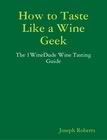
I'm happy to announce that my Wine Tasting Guide, How to Taste Like a Wine Geek: The 1WineDude Wine Tasting Guide is
now available!

Preview a sample of the guide at LuLu.com.


My Wine Tasting Guide details the same practical tasting approach that I used to increase my own knowledge about - and enjoyment of - wine (the greatest beverage in the world). Some of the highlights:
  • A step-by-step guide to tasting wine like the pros (only without the spitting or the snobbishness!).
  • The story of how I overcame my own personal fear of wine, and was able to go from total WineDunce to the 1WineDude (and how that journey helped to form my tasting approach).
  • A practical example of the tasting approach in action.
  • Printable Forms for capturing your own wine tasting experiences.
  • Links to lots of helpful resources, wine accessories, & more (for further wine learning).
The Guide is an expansion of the wine tasting advice that I touched on in one of my previous blog posts. I received such strong positive reactions to the post that I decided it would be fun to create a reference that went into more detail about how my tasting approach developed, in the hopes that it would help others to get more enjoyment out of wine.

The Guide is targeted at those that are either new to wine, or who enjoy wine now but really want to get more out of it and are not sure where to start. If you're one of those people - now you have a place to start!

The eBook is available for $7.95 USD. It's in PDF format for maximum portability. If you need a PDF reader, you can get one for free for both PCs and PDAs from Adobe, and other software providers (my personal favorite is the light-on-the-resources FoxIt Reader).


Reviews:
  • "This ebook, combined with a sample half case or case of wine, can start novice wine geeks on their way to becoming confident wine buyers." - Kathleen Lisson, CSW & Wine Century Club member
  • "Succinct information about how to taste wine, what to look for, and how to really determine which wines suit your palate best. Using his scale, I can confidently state 'I Love It!' when reviewing 1 Wine Dude's e-book." - Douglas Trapasso of Chicago Pinot


Purchase Options:
1) Buy the eBook version at Payloadz.com (PayPal & Google Checkout) - $7.95 USD. Go Get It!


2) Buy the eBook version at LuLu.com (Visa, MasterCard, Discover, American Express) - $7.95 USD. Go Get It!
Support independent publishing: buy this e-book on Lulu.


3) The printed version of my tasting guide can be purchased at Cafepress.com for $10.95 USD. Go Get It!


4) As of July 2008, the Tasting Guide has gone Kindle! If you're hip to Amazon's ultra-cool techno reader, you can grab the Kindle Edition of the guide directly from Amazon.com for $7.95 USD! Go Get It!


Cheers - and Happy Reading!


Affiliate Program
If you'd like to sell my eBook on your blog or website, I'm offering a whopping 47% of the sales to affiliates! You can check out the details here.

Read the full article...

The Wine Messenger

International Wine Accessories